
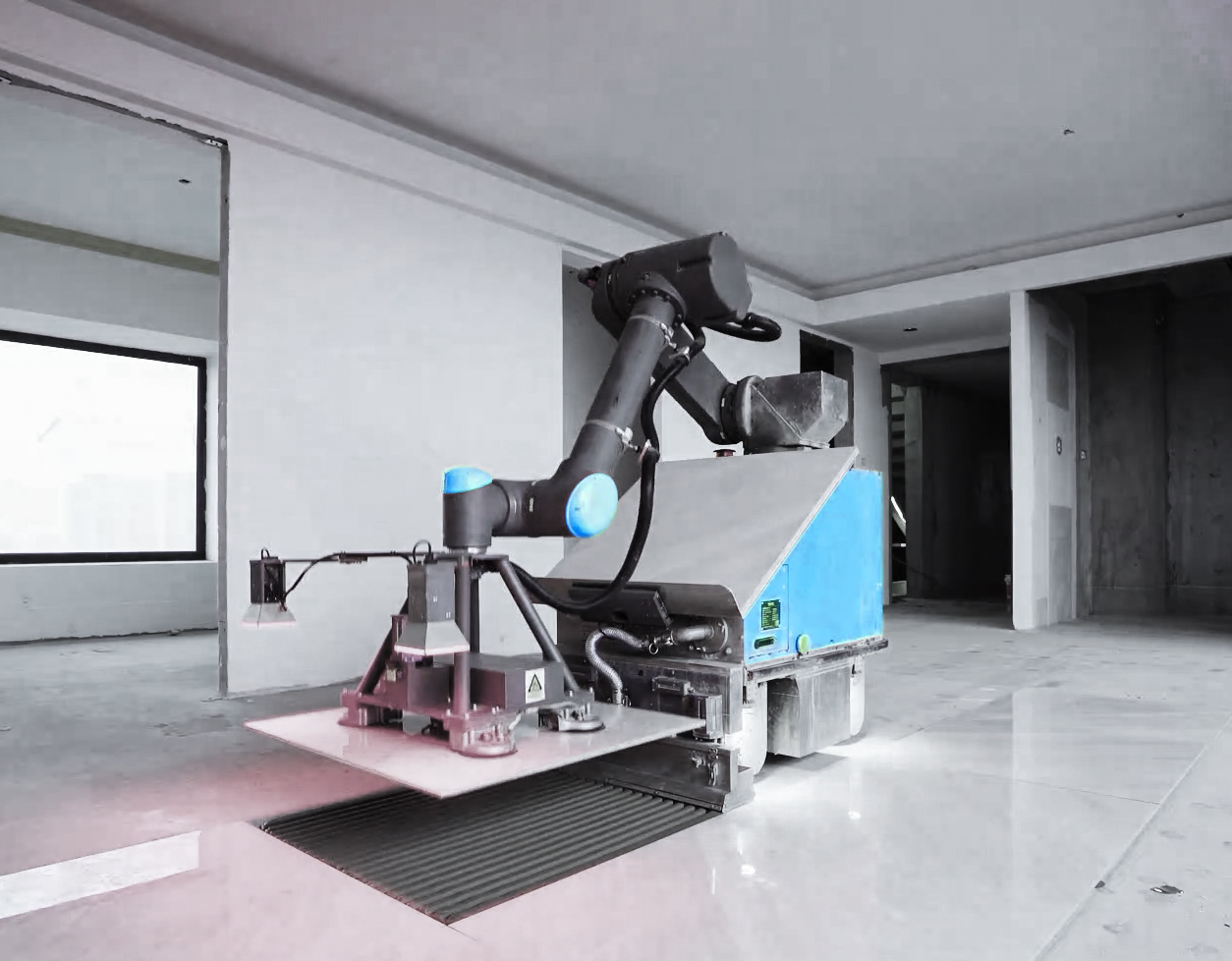
Imagine a construction site where large-format floor tiles are installed with surgical precision, without leveling error, and at a speed that far exceeds human capabilities. It is no longer a scene from a science fiction movie, but the reality brought by the PavePal P900 – an advanced robot designed to autonomously perform one of the most physically demanding and precise jobs in construction. This robot is not just a machine; it is a symbol of the technological revolution that is quietly but surely transforming the way we build.
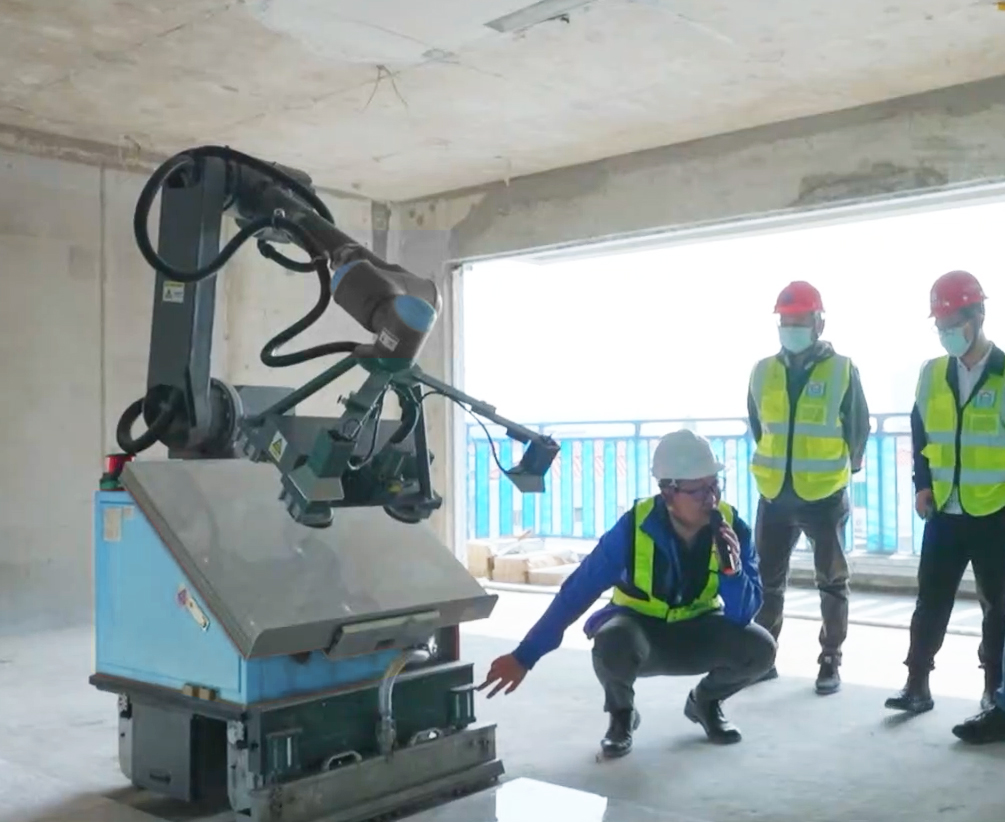
What is PavePal P900? More than just a machine
PavePal P900, manufactured by Partner Robotics, is an autonomous mobile robot specialized in laying floor tiles. Its main task is to automate the entire process, from taking the tile, applying the glue, to precisely placing it on the substrate, following a predefined plan. It is designed to work in large, open areas such as commercial spaces, airports, shopping malls, warehouses and industrial halls, where speed and uniformity are key.
Technology “Under the hood”: How does the PavePal P900 work?
The success of this robot lies in the synergy of several advanced technologies that allow it to “see”, “understand” and act in the complex environment of the construction site.
Laser guidance and mapping (LIDAR technology)
Before starting work, the PavePal P900 uses its LIDAR (Light Detection and Ranging) system to scan the area. It emits laser beams and measures the time it takes for them to return, creating an extremely detailed 3D map of the environment.
- Example in practice: The operator brings the robot into the room. By activating the mapping system, the robot autonomously moves along the walls, detects obstacles such as pillars or openings and creates a digital floor plan. In the software, the starting point, the direction of installation and the width of the joints are then defined. The robot knows exactly where it is at all times with millimeter precision, without the need to draw lines on the floor.
Vacuum gripper system (Vacuum Gripper)
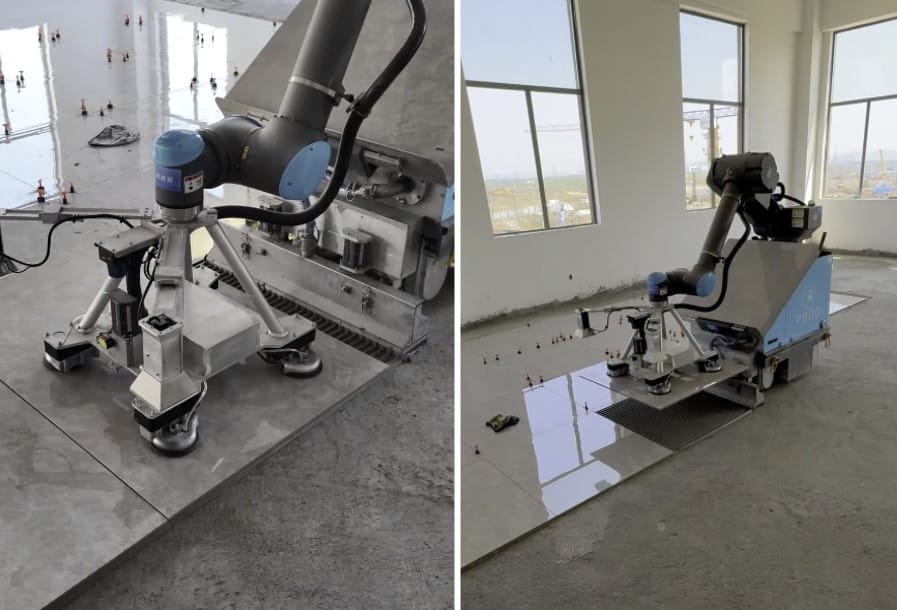
To manipulate heavy tiles, the PavePal P900 uses a powerful vacuum gripper. It consists of multiple adjustable vacuum cups that create a strong negative pressure, enabling the safe lifting and carrying of tiles of different sizes and weights.
- Example in practice: When it reaches the pallet of tiles, the robot lowers its “hand”. Sensors detect the surface of the tile, vacuum pumps are activated and the robot lifts the tile without slipping or damaging it. This system is crucial for working with modern large-format tiles (eg 120×120 cm) that are too heavy and unwieldy for one worker.
Automatic glue application
One of the biggest innovations is the integrated system for applying the bonding material (glue). The robot has a glue tank and a nozzle system that evenly and precisely applies glue to the back of the tile or directly to the substrate, depending on the settings.
- Example in practice: After lifting the tile, the robot positions it above the gluing system. A “comb” with glue passes under the tile, leaving a perfectly even layer with the ideal thickness. This eliminates “cavities” under the tile – a common cause of cracking and peeling in manual work.
Leveling and positioning system
When it reaches the exact location defined on the map, the robot carefully lowers the tile. Using the data from the laser and internal sensors, it positions it in relation to the previously placed tiles, respecting the given width of the joint. Then, using a vibration mechanism (vibro-plate), he gently presses the tile into the glue, squeezing out excess air and achieving perfect leveling.
Material optimization: Precise adhesive dosing reduces unnecessary material consumption, while careful handling reduces breakage of expensive tiles.
PavePal P900 and Market of Serbia
The arrival of this technology on the Serbian market, which faces a chronic shortage of qualified labor in construction
Example in practice: The operator specified a joint of 2 mm. The robot places a tile, and its side sensors measure the distance from adjacent tiles. If there is a deviation, the micromotors make final position corrections before the vibration system finalizes the placement. The result is a perfectly flat floor without “teeth” between the tiles.
Advantages of automation with PavePal P900
The introduction of such a robot on construction sites in Serbia brings multiple benefits:
Speed and efficiency: The PavePal P900 can lay between 70 and 90 square meters of tiles in one eight-hour shift, which is up to 3-4 times faster than the average tiler team, especially for large format tiles.
Superior precision and quality: The machine does not make mistakes. Every joint is identical, and every tile is perfectly level. This drastically reduces the need for later corrections and complaints, which is a common problem in the construction industry.
Reduction of physical strain and injuries: Pottery work is extremely strenuous and leads to chronic back and knee injuries. The PavePal P900 takes on the hardest part of the work, thus preserving the health of workers who can be redirected to supervisory and preparatory work.